

Photo © Anastasiyastar87 | Deposit Photos (I had a dog like this; it’s a miniature pinscher)
I’m hot on the trail of investigating dream sequences. I definitely want to do one in the story. It fits the scene and where the character is emotionally. Yet, I want to make sure it pulls the reader in, and frankly, there isn’t a lot of information available.
The first time I tried a dream sequence, I asked on writing message boards what would be required for one. Everyone’s reaction was horror; they sternly advised that it was a Really Bad Idea. When I made it clear I was going to do one anyway, it was like I had turned into a vampire; they slowly backed away, holding up crosses and garlic as if they would catch what I got.
Dream sequences are on every top ten list of “Do not do this,” because everyone fears anything that will get them rejected. Thus, no one teaches how to do it correctly.
In fact, I’ve been unable to find anything even in the old writing magazines. Haven’t gone through all yet, but I’ve hit flashbacks now about five times. This might be a challenging area to find much on.
So, this list is based on what I have been able to dig up, and also from sources that aren’t about dream sequences. Sometimes a girl’s gotta improvise…
- A dream sequence has to behave as a scene. It has to connect with the rest of the story, and the character. J.D. Robb uses them in every one of her In Death books. In the dreams, it’s either a case that stirs up memories of Eve’s violent past, or a case that has her subconscious working in strange ways (that’s later in the series, so the dreams have evolved).
- The dream shouldn’t be too abstract. I’ve been guilty of this myself. The dream imagery is fun to play with for my creative side. Realistically, most readers aren’t going to know that being barefoot in a dream might mean you’re defenseless. At least I wouldn’t rely on that as something the reader needs to know to understand the story; rather, it would be something extra for the reader who knows.
- The dream shouldn’t be too literal. This is also another problem area where writers treat it, essentially like a flashback, showing backstory the writer couldn’t figure out how to get into the story.
Dreams should be in the happy middle of 2 and 3, vaguely weird but with elements of reality (which is how it connects to the story and the character). They should have that fantastical, surreal element that readers would expect from one. Eve Dallas sometimes finds herself arguing with a murder victim who berates her for not finding the killer. - Dreams should be in the middle of the story. I’m pulling this from the same principles as a flashback; it’s middle story territory. You want time to establish the character, and potentially the reason for the dream, as well as the setting. That’s pretty hard to do if you open with it. The reader hasn’t even had a chance to get to know the character.
- Transitions should be clear. This is like in a flashback, though the transitions will be different. Start with a time jump—that is just a transition that shows time has passed from the last scene. Then spend a sentence or two establishing that what’s coming is a dream. You can’t be subtle here; the reader will miss it and be confused. My only writing rule: do not confuse the reader.
- For the dream, this site has some tips on either being “infuriatingly vague” or “Go into detail overload” (especially of objects you wouldn’t expect detail on). This is where you can have fun, as long as you stay within the framework of the dream being connected to the story. Overboard doesn’t mean paragraphs and paragraphs of description. You can do that with two or three sentences worded for maximum overload.
- Connections to the story should be something obvious to the reader, and maybe something not so obvious, but that’s planted in plain sight. This uses information flow by hiding by distraction.
- Keep the dream simple. Kane Holder recommends one emotion. But a fictional dream isn’t something that should be terribly complicated. If you keep adding layers and layers of complexity, the reader’s likely to skip it.
- Keep it short. You probably don’t need more than five hundred words. That doesn’t sound like a lot, but if you keep it simple, it should be more than enough.
- Action/Reaction: The dream is the action. After the character wakes up, she should react to the dream. It doesn’t have to be a strong emotional reaction (like to a nightmare); it can be puzzlement of “Where did that come from?” She can talk to someone else about it over breakfast, or even later in the day.
- Consider how long the reaction lasts. Your character’s reaction doesn’t necessarily end with that scene. She could be feeling off all day, or irritated. In the Eve Dallas series, in a few books, the nightmares are so disturbing that she has to talk to someone about them. All about context.
Dream sequences aren’t to be feared, especially when you’ve approached it making your characters more complex.
Anything I’ve missed? Hit reply and tell me.
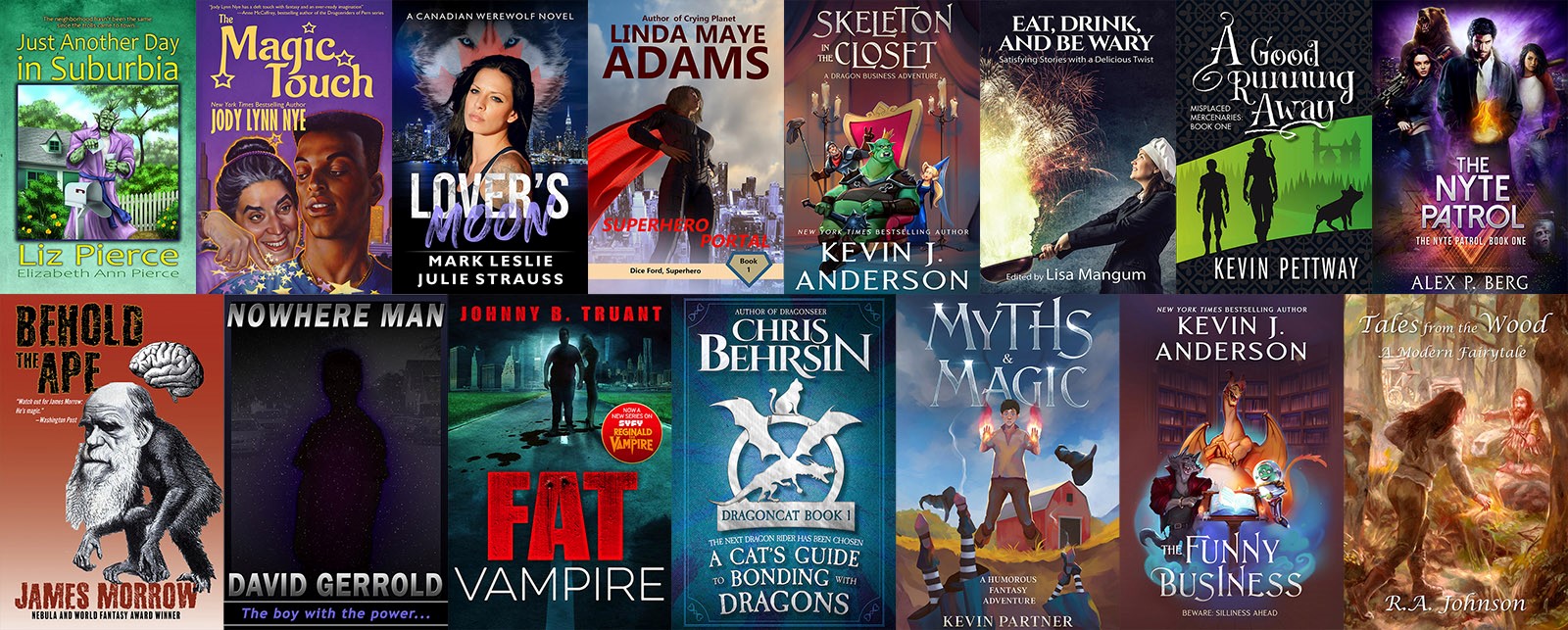
Superhero Portal is in the Humorous Fantasy Storybundle for the next three weeks. Click here to get an amazing array of fantasy books for your summer reading.
Book giveaway! Battles, Beasts, and Blessings. Find some new writers. There are over 50 books to pick from.
 Linda Maye Adams